March 18, 2013

Sweet Nothings


I hate diet soda. Can’t stand the stuff. My mom gets headaches from aspartame, which was the primary artificial sweetener when I was a kid, so we never had diet anything in the house. I’ve never gotten used to the fake taste. The aftertaste is like sickly sweet fuzz coating my mouth. If you see me drinking a diet drink it’s because there are no other drinks to be had, and I’m about to pass out from thirst. And I’ll still be making a face about it.

As I’ve grown older, I’ve developed moral objections to artificial sweeteners in addition to taste objections. If you are like most people I know, you are, right now, raising one eyebrow and wondering on what grounds I can morally object to artificial sweeteners (hereby to be known as AS so I can stop typing so much). Also before I go any farther, please keep in mind that this is largely a theoretical discussion. Nothing I say here is directed toward individuals. If you drink diet soda, I will still be your friend, and I do not think you’re a bad person. K?

My objection is very simply this: things that are sweet are meant to have calories. That is the way the world was made, and we should respect it. Using AS is a way of getting something (sweetness) for nothing. It’s an extension of a trend that I see in American society at large. As a nation, we seem to want the easy road all the time. We want to eat and drink whatever we want and not work out, but also not gain weight. We want to be lazy and spend our day at work on Facebook, but still get paid. We want to run around and drink and have sex and babies, but not take care of them. Clearly, I’m making broad generalizations, but hopefully you see where I’m going.

Sweetness is supposed to have consequences. It is supposed to have calories. Why? Because we need a certain amount of it as fuel for our bodies. I doubt that sugar tastes good as a coincidence. I suspect there are deep-seated evolutionary benefits for experiencing certain foods with certain chemical properties as sweet and pleasurable. It makes us want to eat it. That gives us fuel to survive and multiply. Where we run into trouble is when we eat too much of it. This was probably less of a problem in hunter gatherer societies many moons ago—less access to sweets and more exercise. It’s a bigger problem when a month’s worth of sugar is a mere binge-of-the-Halloween-candy-washed-down-with-soda away—lots of access and no exercise.

Rather than address this problem by practicing and teaching moderation, we took that time and energy and put it into finding a way to circumvent Mother Nature. We invented AS. It tastes sweet on our tongue, but our bodies can’t metabolize the substance, so it doesn’t add to our caloric intake. Brilliant, right? All I will say on the health front is that the only healthy, natural drink I know of that is calorie free is water. If you’re drinking diet soda, you’re drinking water and chemicals. To me, that does not sound good. I’ll take the water and skip the chemicals.

As good as our intentions may have been to invent AS, they don’t seem to have really done what they were meant to do. Obesity is rampant. I’m not going to pin all of obesity on diet soda, but the get something for nothing mindset is definitely a factor.

After having a baby I’ve been watching what I eat to try and shed those extra pregnancy pounds. My husband, whose foray into his 30s came with a bit of sympathy weight, has joined me. Sunday morning as we worked on our grocery list, he tried to point out some diet sodas that didn’t taste too bad. Sucralose doesn’t taste nearly as bad as aspartame. But taste alone is not the point. As I told him, if I’m having soda, then I am acknowledging that it comes with calories—just like I would if I were having a hard cider or juice or milk or any other non-water beverage. I try to take that into account and decide if the treat of the soda is worth the extra calories at that moment of my life. I actually drink soda pretty rarely, with the exception of post-throwing-a-party soda that needs to be gotten rid of, so a Dr. Pepper with my Chipotle is a treat (and none of it figure friendly!).

I have realized that other areas of my life my benefit from the same perspective—like my chocolate cravings. But really the philosophy extends to all of life. Nothing is free, and if something is worth doing, it’s worth the price (calories, time, money, whatever) that goes along with it. Not only that but, in some cases, the price is part of enjoyment, like investing time to practice piano or go for a run or demonstrate healthy food choices for our kids. The cost can actually make the prize even sweeter.

March 14, 2013

The Bible-IV


With the prophets, so goes the Old Testament. I’m finally ready to get into the New Testament.

I found myself wishing for an annotated Bible while I was reading this section. Even though the prophets did say what year in whose reign they were writing from, I still didn’t really know what was going on in Israel and the ancient world at the time. As a result I was often confused as to how the prophesies related to what was happening. Some prophets were in Israel, some were in Babylon. Not having that context made it very hard to follow.

Most of the prophets seemed pretty sane, but, and I say this with the utmost respect, I’m pretty sure that Ezekiel was in fact smoking something. His visions were pretty out there. That was one that was particularly challenging for me to read.

I am also somewhat confused as to the transition from God being extremely upset with the Israelites and sending them into exile and killing a lot of them, but then turning around and punishing the oppressors that he ordered to do the killing and exiling in the first place. It was pretty obvious how the people had initially messed up. But it seemed a little unfair to basically use the Babylonians, et al. as pawns to destroy them and later on destroy the Babylonians for that same act. It is certainly possible that I am missing some info that would make that one come into line.

I did enjoy one section, and I can’t remember where it was now, that did really seem to foretell the coming of Jesus. That was really pretty cool to read.

A very short sum up to end the Old Testament. I’m looking forward to moving on.

March 7, 2013

Cinderella


There she stood, Cinderella. Her hair was uncombed; it looped and spiraled in a messy part around her face. Her face bore as its only makeup an orange juice mustache and a faint sheen of dried snot from a runny nose. Her princess dress was falling off her shoulders, worn on top of pink, fleece snowman jammies. I stood at the opposite end of the hallway—an unlikely Prince stand-in.

 
But when she daintily lifted the hem of her gown and smiled as she came to meet her prince at the ball, waving hello to imaginary friends, no less, no beauty queen could match her. The glow in my daughter’s face spoke of the perfect fairy tale she had crafted for herself. We danced in her “ball”room. Then she took my hand and told me, “Now we’re going to dance on the balcony.” It turned out the balcony was located in the kitchen. Who knew?

It broke my heart a little bit to send Cinderella off to get dressed for school. Nothing so normal and boring as school should happen to Cinderella. But off she went and once her purple jeans and pink shirt were on, the ball gown went on top. Thankfully, the ball gown did not go to school with her.

Especially now that we have two, I find myself spending a lot of time running around and relying on H to amuse herself. Little J can’t do much on his own, but she can. It’s a huge help to know that I can set her up with a snack or some play dough and have time uninterrupted to feed and cuddle J.

On the flip side of that coin, more and more she’s asking me, “Mommy, can we play?” And I have to remind myself that it’s more important to take 10 minutes and play with her now than to tidy up. Soon she’s going to grow up. Cinderella will stop being her favorite princess. She’ll stop inviting Dorie (from Finding Nemo) to come play at our house. And at some point, she’ll stop asking me to play.

Until that devastating moment, I’m going to try to make sure that she knows I think she’s fascinating. The worlds and worlds she creates in her mind are endless. The names she comes up with for imaginary friends and baby dolls are unpronounceable. And her delight when you buy into the whole thing and go on that ride with her is infinite.

So despite a tight before-school schedule and the ticking baby-time-bomb asleep in the next room, I was so glad that H asked me to be her prince this morning. I know that I’ll always remember what a stunning pajama princess she is, and I hope that she remembers that Mom had time for her and danced with her on the balcony.

February 12, 2013

My Tootsie Valentine


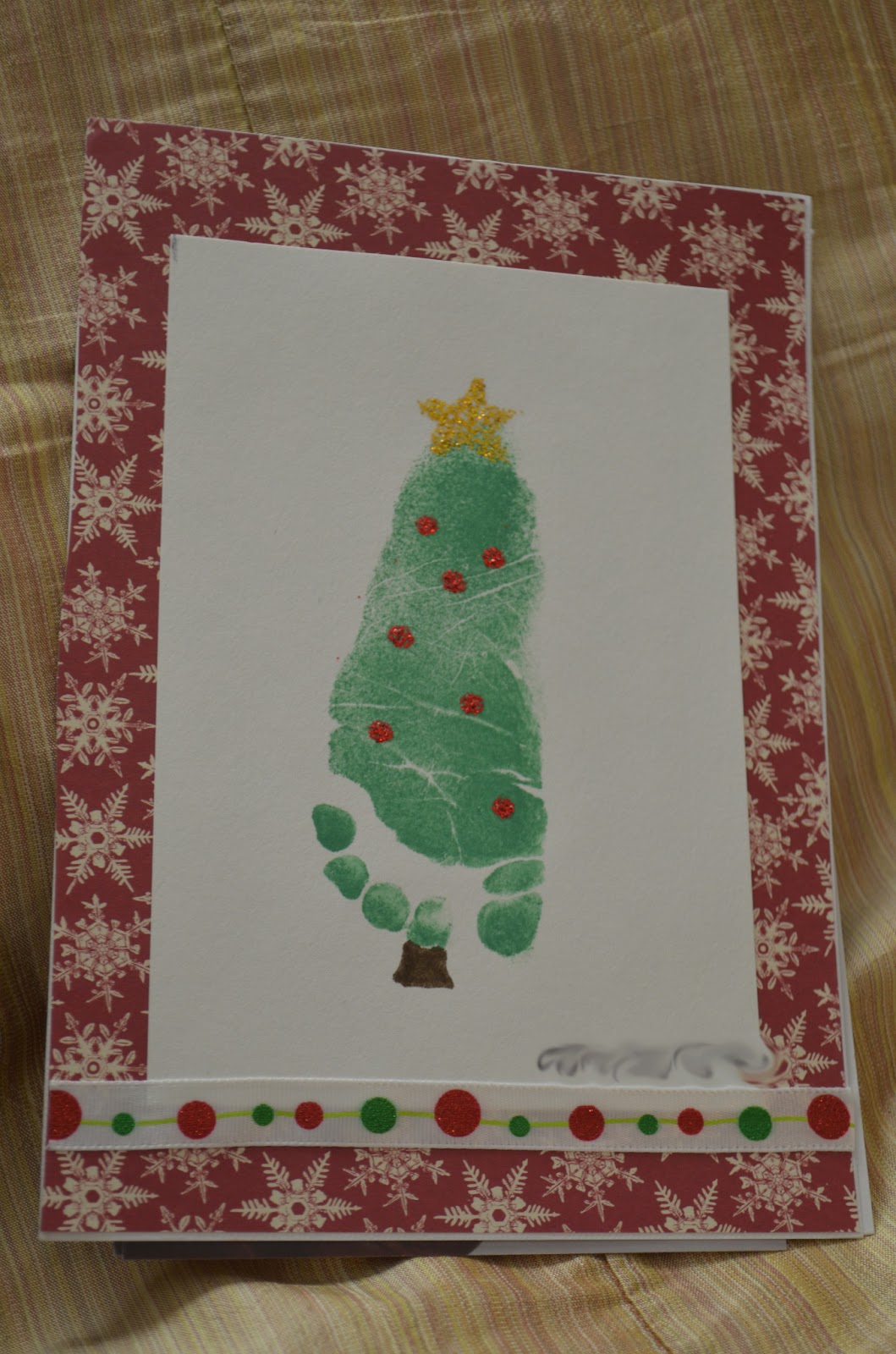
As I was finally putting away Christmas cards a couple of weeks ago, I pulled out the one from my very crafty sister-in-law. I was admiring/envying her smarts at using her sweet baby’s footprint in the card when I had a brainstorm. Namely that Valentine’s Day is coming up. I’ve sent Valentine’s cards from H to her grandparents on and off. It’s a holiday or “holiday” that comes at a time when you’re fully recovered from Christmas and, in our family, a deluge of January birthdays, but you’re not yet caught up with any other holidays. A lull.


So, Valentine’s Day and feet. Well, if one foot can make a tree, then two feet can make quite a nice heart. One ink pad and a few blank cards later and I had handmade cuteness to send to some of our favorite people.

A couple of tips if you try this yourself: I did all of one foot and then all of the other. Easier to control one ink stained foot as opposed to two. Baby wipes work wonders to get the ink off once you’re done.

Happy Valentine’s Day to you and all the little feet in your life.

February 5, 2013

Brideshead Revisited


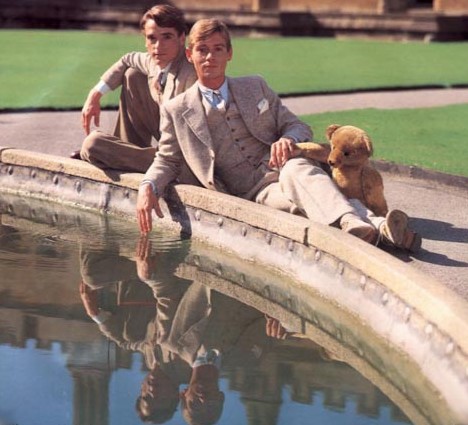
Side note: One of the characters briefly carries around a teddy bear named Aloysius. Probably one of my favorite parts of the book.


Synopsis:
Told mostly in flashback, Charles relives his friendship with the Marchmain family when he discovers that his army unit is camping out at the family’s estate.

He meets Sebastian, the charismatic second son, during his freshman year at Oxford. They become best friends, and Charles is slowly introduced to the quirky family. After Sebastian begins his descent into serious alcoholism Charles doesn’t see the family for 10 years. In that time Charles becomes a successful painter. On his return trans-Atlantic sea journey from a painting trip in South America Charles meets up with Sebastian’s younger sister Julia.

When Charles first met her, Julia seemed young and somewhat brittle. Meeting again, both married, the pair fall in love during a terrible storm that renders most of the ship’s passengers (including Charles’s wife) bed ridden. They begin a serious affair that leads to both of them seeking a divorce.

Just as Charles’s divorce is being completed and Julia’s is beginning, Julia’s father returns from self-imposed exile overseas. He is terminally ill and the family gathers (excepting Sebastian) to be with him during his final weeks. They learn that Sebastian is serving as a lay person in a monastery in Northern Africa. The father’s death reignites Julia’s religious feelings, and because she is Catholic, she ends her relationship with Charles. (No divorce in the Catholic Church, etc.)

The novel ends with Charles in the present visiting the chapel at the family estate, Brideshead. He sees the lamp glowing and it brings him a sense of peace.

Other Thoughts:

  • First off, I had been reading the book for a few days at least before I realized that Evelyn Waugh is a man. The English sometimes do have a penchant for giving boys typical girls’ names.


  • I sort of wished I had a primer on life at Oxford before I read the book. The beginning is very much steeped in Oxford culture and a lot of it didn’t quite make sense to me. It didn’t seem like there were classes per se or that anyone went to them, for example. In that way, it’s a very English novel. Clearly, that observation shouldn’t be surprising as it was written by an Englishman smack dab in the middle of World War II.
  • When I got to the end of the novel, I felt a bit like I did at the end of Crime and Punishment. I had read this whole narrative and then on practically the last page, the author announces that it was never really about the story, it was about God. Don’t get me wrong. I’m totally fine with the novel being about God, but in both cases, it seemed out of left field. When you are reading the book for example, you keep expecting Charles and Sebastian to reconcile or somehow see each other again and they don’t. Sebastian just disappears into a haze of smoke in a North African bazaar. The love affair with Julia is sudden and passionate, but then dissolves seemingly in an instant. There were lots of conversations concerning God in the novel. The character of Charles is an agnostic, so there’s lots of trying to explain the Catholic faith to the heathen conversations. Honestly, those conversations seemed like window dressing when I was reading it. It wasn’t until I finished the whole thing that it was obvious that they were trying to set Charles up to feel a religious epiphany when he finds himself unexpectedly at Brideshead again.

  • It’s not at all a bad read, but I’m not sure I’d recommend it to you if you were wondering what to pick up next. I think the best word to describe my reaction would be “bemused.”


Next on the docket: The Grapes of Wrath. I’m starting the second quarter of the list!

Printer Friendly